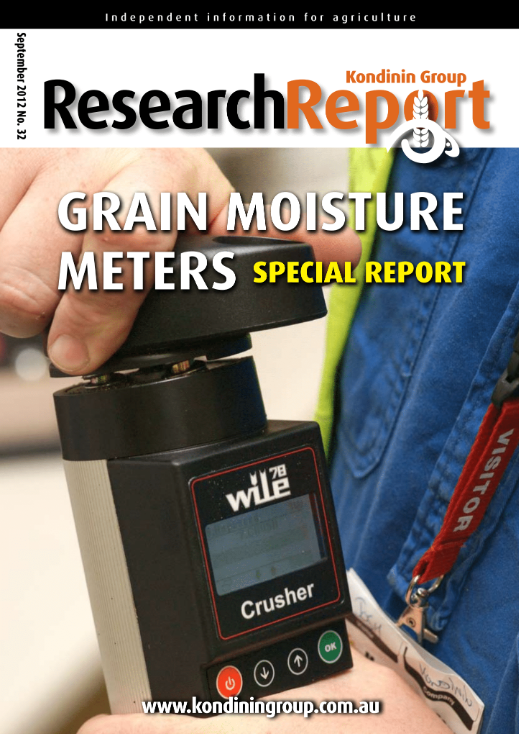
A grain moisture meter is an essential tool for growers, whether checking a load before transport to the bin, or assessing moisture levels before grain goes into storage or is dried. In the first comparison of moisture meters in six years, Kondinin Group engineers Josh Giumelli and Ben White assessed 12 units, hand testing 800 grain samples in the process.
This in-depth, independent evaluation—supported by the Grains Research and Development Corporation (GRDC)—provides practical insights into the performance of a wide range of grain moisture meters currently available to Australian growers. Each device was tested using real-world wheat and canola samples under laboratory conditions, with repeat testing to assess both accuracy and consistency of results.
The report reveals that not all meters deliver reliable readings straight out of the box. Farmers are strongly encouraged to verify their own moisture meter results against those recorded at receival sites, and to calibrate accordingly to ensure their grain meets the strict specifications required for acceptance. The ability to adjust calibration on-farm—without needing software updates or manufacturer support—is an important feature covered in this study.
By understanding how different models perform across a variety of grain types and moisture levels, growers can reduce the risk of rejected deliveries, protect grain quality, and make more informed storage and handling decisions.
Download the full report to view all test results and recommendations…