
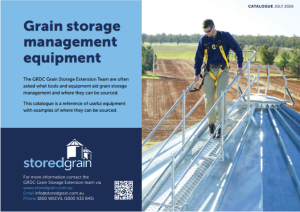
Grain storage management equipment
The GRDC Grain Storage Extension Team are often asked what tools and equipment aid grain storage management and where they can be sourced.
This catalogue is a reference of useful equipment with examples of where they can be sourced.
The current guide for Phosphine Fumigation
.Safe Work Australia announced changes to Worker Exposure Limits for airborne contaminants, affective December 2026. This article aims to provide the latest information available to manage phosphine use in compliance with the new limits.
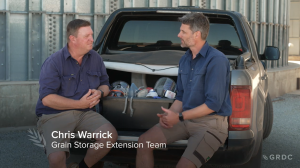
Dust masks and eye protection: Grain storage safety essentials
Dust exposure is a common but often overlooked safety risk in grain storage operations. Watch as Chris Warrick and Ben White from the GRDC Grain Storage Extension Team discuss the importance of choosing the right dust masks, respirators, and eye protection when working around grain storages, silos, and sheds. Learn when to use P2 and P3 dust masks, the benefits of full-face respirators, and how sealed safety goggles help protect against airborne dust during grain handling, storage cleaning, and compressed air use.

Home made venturi for DE application with leaf blower
Grain storage specialists Chris Warrick and Ben White show how a homemade venturi attachment can be used with a leaf blower to apply diatomaceous earth.
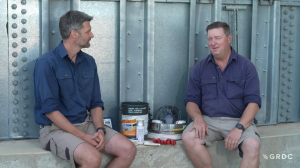
Fumigation timing for stored grain
When is the best time to fumigate stored grain? Ben White and Chris Warrick from GRDC’s Grain Storage team discuss three common fumigation timing strategies: pre-emptive fumigation after harvest, fumigation on insect detection, and calendar-based fumigation. Learn why gas-tight, pressure-tested silos are essential, how aeration cooling can improve storage outcomes, and how to balance fumigation timing with grain quality, market requirements, and buyer specifications.
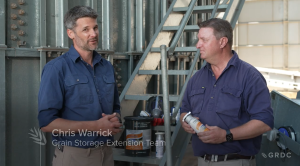
The fumigation process in grain storages
Successful grain storage requires an essential grain fumigation process to achieve effective insect control and help prevent phosphine resistance in stored grain. Ben White and Chris Warrick from GRDC’s Grain Storage team explain best-practice phosphine fumigation, including the importance of gas-tight, pressure-tested silos, correct phosphine dosage calculations, exposure periods, residue management, ventilation requirements, and withholding periods. Whether you’re managing wheat storage, grain silos, or on-farm grain storage facilities, this practical guide provides valuable advice for successful grain fumigation, stored grain pest management, and maintaining grain quality.
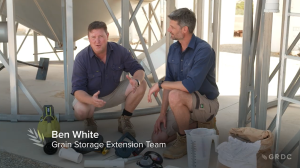
Diatomaceous Earth application in sheds and silos
Learn how to apply Diatomaceous Earth (DE) for effective grain storage hygiene in silos, flat-bottom silos, and grain sheds with Ben White and Chris Warrick from the GRDC grain storage extension team. They demonstrate practical DE application methods using leaf blowers, homemade venturi systems, PVC fittings, and traditional blowback guns. Discover how to achieve even DE distribution, calculate the correct application rate, improve insect control in stored grain facilities, and safely treat storage structures with proper PPE.
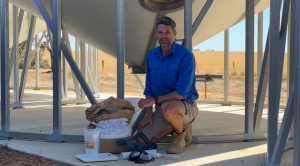
Use DE (Diatomaceous Earth) not lime
Grain storage specialist Chris Warrick explains, as a structural treatment for empty grain storages, DE (Diatomaceous Earth) is far more effective than lime.
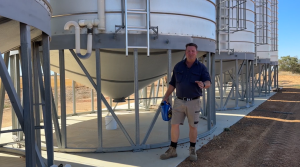
Oil for pressure relief valves on sealable silos
Grain storage specialist Ben White demonstrates how to select and maintain oil in pressure relief valves on sealable grain silos.