
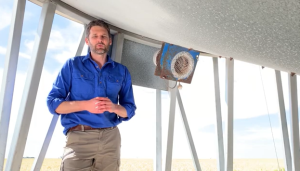
Holding Over Moisture Grain With Aeration Cooling
Chris Warrick explains the option of using aeration cooling to hold slightly over moisture grain until it can be dried or blended with dryer grain.

Home made venturi for DE application with leaf blower
Grain storage specialists Chris Warrick and Ben White show how a homemade venturi attachment can be used with a leaf blower to apply diatomaceous earth.
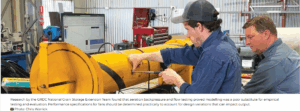
Research Guides Growers Investing in Grain Storage Aeration
A recent study by the GRDC National Grain Storage Extension Team highlights a vital insight: relying on theoretical models for aeration fan performance isn’t enough — real-world testing is critical. Research involving backpressure and flow testing showed that fans with identical motor specifications performed very differently under typical storage conditions. In practical terms, at a backpressure of around 300 pascals (a level you’d encounter in around 100 tonnes of grain), airflow varied dramatically—from just 120 liters per second to as much as 360 L/s—depending solely on the fan’s impeller and housing design.

Monitoring Grain Temperature
During this video, Chris Warrick and Alex Conway discuss ‘Monitoring grain temperature’ and explore the various methods available and the factors to consider when deciding on a system that’s best suited to your business.

Insect Control and Effective Fumigation Help Guard Your Harvest
Protecting your harvest from insect threats requires diligent control and precise fumigation practices. In GRDC’s article, Insect Control and Effective Fumigation Help Guard Your Harvest, the focus is on strategies to enhance biosecurity and preserve grain quality. Key points include:
Fumigation Best Practices: Effective fumigation techniques are critical for eliminating pests while safeguarding the crop.
Biosecurity Measures: A strong biosecurity approach helps prevent insect infestations before they become a threat.
Integrated Pest Management: Using a combination of methods, including proper storage and sanitation, can minimize pest risks.
Stay informed on the best methods to protect your harvest and ensure grain quality

A Clean Approach to Pest Management
Explore innovative pest management strategies focused on cleanliness and proactive practices in GRDC’s latest article, A Clean Approach to Pest Management. This approach highlights how effective sanitation and hygiene practices can reduce pest infestations, helping to maintain crop health and yield. Learn more about practical steps for pest prevention and control in this comprehensive guide.

GRDC Grains Research Update Online – Pre-Harvest Grain Storage Health Check
Pre-harvest grain storage health check – Chris Warrick, Primary Business.
With harvest looming this livestream will address timely factors that will impact your grain storage outcomes. Preventing issues is always better than dealing with them and the loss they cause. Topics will include high impact hygiene, this year’s protectant choices and application, retrofitting and utilising aeration cooling.

The Science of Cool
The GRDC Grain Storage Extension team travelled extensively, gathering data on aeration performance in the field. The team tested some 48 different silo configurations with a range of fan types and with different grain types and depths.

The Automatic Advantage of Grain Cooling
Automatic grain cooling technology offers a reliable solution for maintaining grain quality during storage. In GRDC’s article, The Automatic Advantage of Grain Cooling, discover how automated systems provide consistent temperature control, reducing the risk of spoilage and pest infestations. By regulating grain temperatures automatically, this technology minimizes the need for frequent manual checks and helps growers protect their harvest with less effort. Automated cooling systems not only preserve grain quality but also offer energy efficiency, making them a valuable tool for modern grain storage management.
Learn more about the benefits of automatic grain cooling in maintaining optimal storage conditions.