Skip to content
Grain Storage Facilities

Kondinin Group Sealable Storage Report

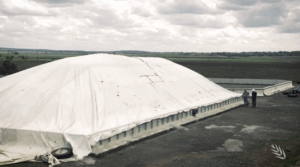
The latest Kondinin Group sealable storage report is here! Building on the 2022 review of grain silos, this updated report provides fresh insights, performance comparisons, and practical guidance for growers considering on-farm storage options.

The new findings highlight key changes in silo performance, sealing effectiveness, and best-practice recommendations to help growers make informed decisions when investing in grain storage infrastructure.

Read More »
Information Hub

Phosphine Best Management Practices: Disinfesting stored commodities

Phosphine remains the most widely used fumigant in Australia’s grain industry due to its effectiveness, low cost, and residue-free status. However, increasing resistance among key insect pests highlights the need for strict adherence to best practice guidelines.

This comprehensive manual outlines:
1. Proper application methods across different storage types (silos, bunkers, sheds)
2. Critical factors such as gas concentration, exposure time, temperature, and moisture
3. Equipment for monitoring gas levels and ensuring safe fumigant handling
4. Strategies to delay and manage resistance, including use of sulfuryl fluoride and integrated pest management

Compiled by leading experts including Dr Manoj Nayak, Dr Joanne Holloway, Chris Warrick, and Patrick Wilson, this document is a valuable resource for growers, storage operators, and advisors working to maintain grain quality and market access.

Read More »
Grain Quality

Seeds need cool, dry conditions, no matter the variety

As investment in on-farm storage grows, new research shows why it is critical to maintain wheat seed in cool, dry conditions

Agriculture Victoria research scientist Dr Cassandra Walker was not surprised that her study into the impact of storage conditions found that wheat seed viability declined at higher temperatures.

But what did strike her was the significant role that moisture plays, and in particular the difference in viability between grain moisture levels of 11 and 14 per cent.

“We studied two moisture levels – the upper end of what is considered safe at 11 and 14 per cent – and clearly there’s a tipping point between them where grain viability is lost,” she says. “So moisture content has a big part to play, as well as temperature, in germination potential. You can preserve grain viability for longer with lower moisture levels.”

Read More »
Grain Aeration

Monitoring Grain Temperature

During this video, Chris Warrick and Alex Conway discuss ‘Monitoring grain temperature’ and explore the various methods available and the factors to consider when deciding on a system that’s best suited to your business.

Read More »
Insect Control

Fumigation Recirculation

During this video, Chris Warrick and Alex Conway discuss ‘Fumigation recirculation’ and provide guidance on both passive and powered systems.

Read More »
Insect Control

Fumigating and Venting Grain Bags

During this video, Chris Warrick and Alex Conway discuss ‘Fumigating and venting grain bags’, providing information and advice on the venting process. This includes the timelines required for this practice.

Read More »
Grain Hygiene & Structural Treatments

Maximizing Grain Storage Protection with Diatomaceous Earth (DE)

Diatomaceous earth (DE) is a proven solution for pest control in grain storage, but its effectiveness depends on uniform application. Recent research highlights that battery-powered and petrol-powered blowers with venturi attachments deliver superior distribution compared to traditional compressed-air methods.

Read More »
Grain Quality

New research shows wheat falling number may improve after storage

GRDC Grain Storage Extension Team lead Chris Warrick said trials by Agriculture Victoria’s research team at Horsham SmartFarm indicated wheat falling number could increase by up to 50 seconds and even exceed 300 seconds post storage.
where wheat had an initial falling number of less than 250 seconds, no change in falling number was observed.
Mr Warrick said while the research was preliminary it had yet to be replicated in farm storage conditions.

Read More »
Grain Storage Facilities

From Paddock to Pin

The journey from grain paddock to a pint of beer involves careful management at every stage to maintain quality and meet brewing standards. GRDC’s article, From Paddock to Pint, explores the critical steps in the grain supply chain that ensure high-quality barley for brewing. From optimal growing practices to specialized storage and handling, each phase is essential in delivering a premium product for the beer industry. This article highlights the close collaboration between grain growers and brewers, emphasizing how quality control from farm to brewery impacts the final product.

Discover the process that brings barley from the paddock to your pint.

Read More »