
Guide to grain storage protectant choice.
Continue reading
Guide to grain storage protectant choice.
Continue reading
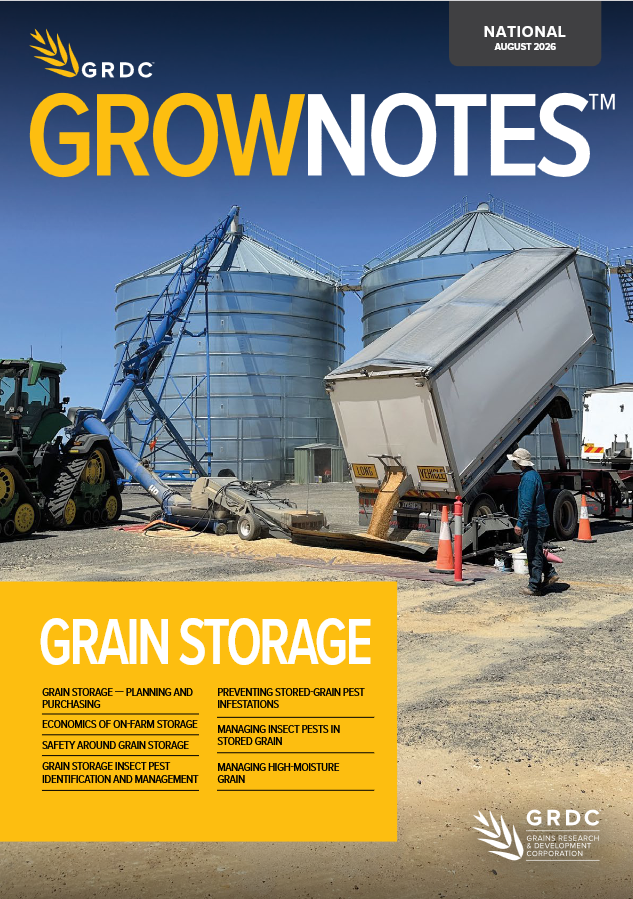
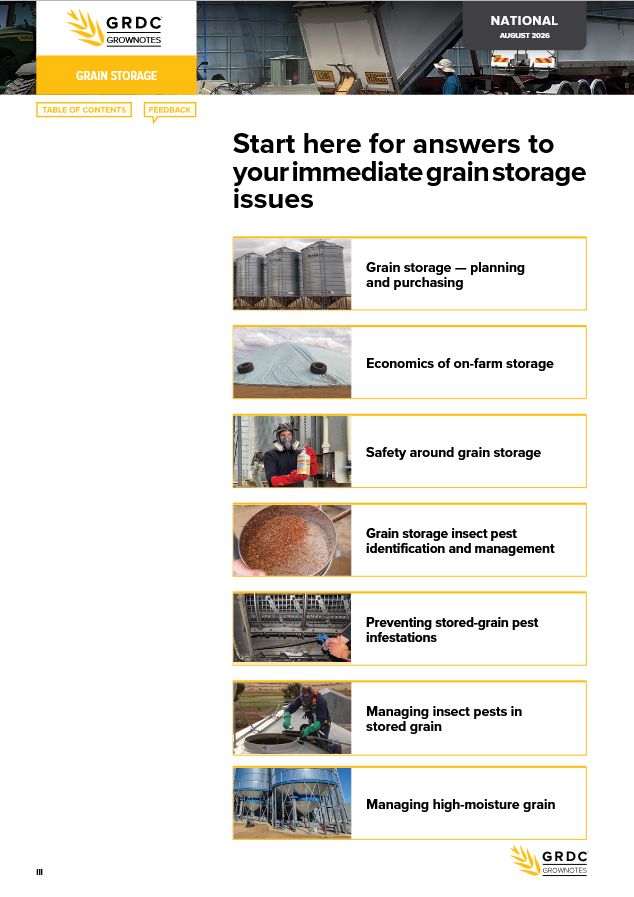



Dust exposure is a common but often overlooked safety risk in grain storage operations. Watch as Chris Warrick and Ben White from the GRDC Grain Storage Extension Team discuss the importance of choosing the right dust masks, respirators, and eye protection when working around grain storages, silos, and sheds. Learn when to use P2 and P3 dust masks, the benefits of full-face respirators, and how sealed safety goggles help protect against airborne dust during grain handling, storage cleaning, and compressed air use.
Continue reading
Grain storage specialists Chris Warrick and Ben White show how a homemade venturi attachment can be used with a leaf blower to apply diatomaceous earth.
Continue reading
Learn how to apply Diatomaceous Earth (DE) for effective grain storage hygiene in silos, flat-bottom silos, and grain sheds with Ben White and Chris Warrick from the GRDC grain storage extension team. They demonstrate practical DE application methods using leaf blowers, homemade venturi systems, PVC fittings, and traditional blowback guns. Discover how to achieve even DE distribution, calculate the correct application rate, improve insect control in stored grain facilities, and safely treat storage structures with proper PPE.
Continue reading
A recent study by the GRDC National Grain Storage Extension Team highlights a vital insight: relying on theoretical models for aeration fan performance isn’t enough — real-world testing is critical. Research involving backpressure and flow testing showed that fans with identical motor specifications performed very differently under typical storage conditions. In practical terms, at a backpressure of around 300 pascals (a level you’d encounter in around 100 tonnes of grain), airflow varied dramatically—from just 120 liters per second to as much as 360 L/s—depending solely on the fan’s impeller and housing design.
Continue reading
Research from the GRDC Grain Storage Extension team has revealed a safer and more effective way to apply diatomaceous earth (DE) in empty on-farm silos. DE, a flour-like dust made from fossilised aquatic organisms, works as a non-chemical control by dehydrating insects through abrasions to their waxy coating.
Continue reading
As silos age, growers face a crucial decision: repair, retrofit, or replace. The first step is always safety. Grain Storage Specialist Chris Warrick advises that growers begin by checking whether the silo is structurally sound. Cracked or tilted bases, rust on critical joints, or weakened bolts and sheets can all compromise safety and increase the risk of collapse. Faulty hatches, ladders, and access points also need to be addressed to protect workers.
Continue reading
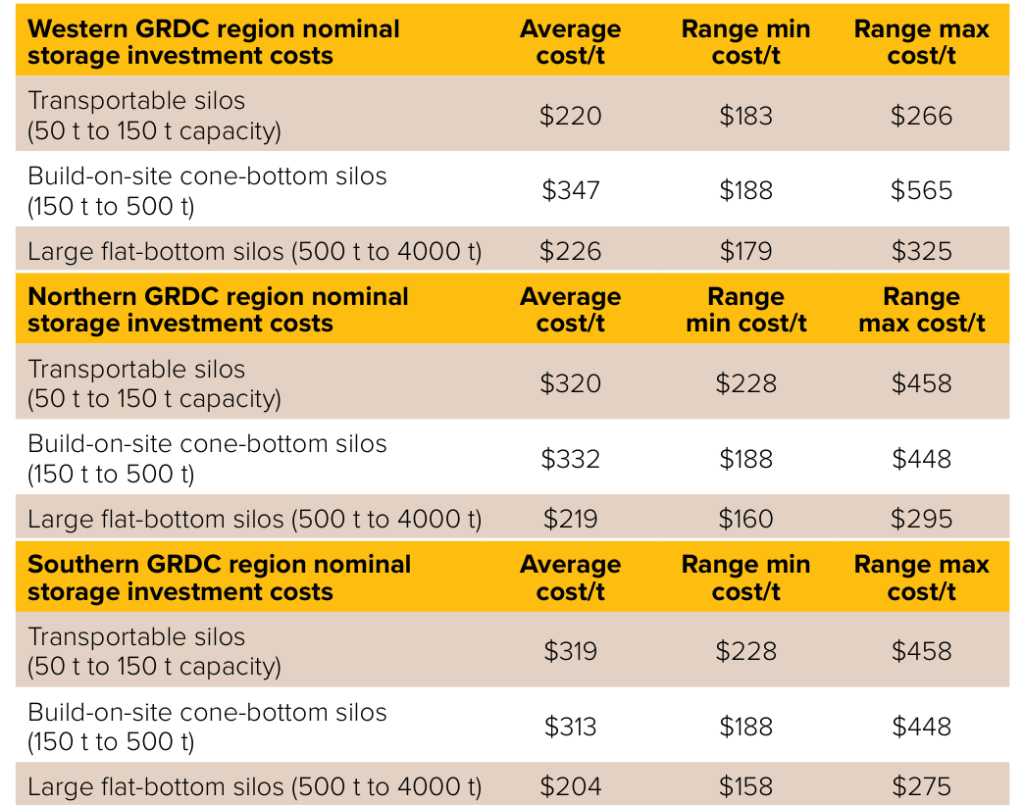
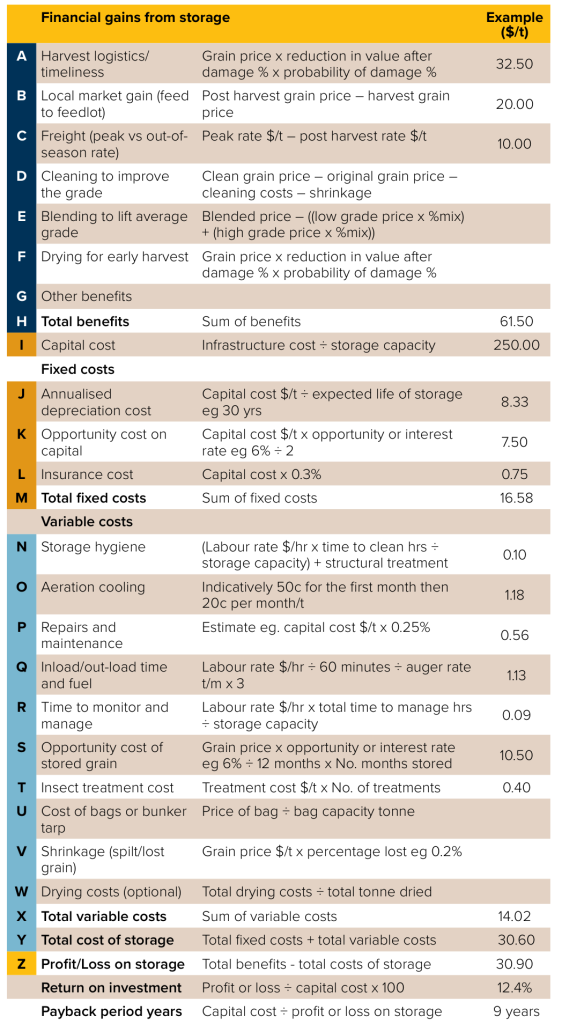
Australian growers are steadily lifting the standard of on-farm grain storage. In the past 15 years, average capacity has almost tripled – from about 850 tonnes in 2009 to more than 2450 tonnes in 2024. This growth reflects the importance of storage as part of the farming business model: capturing market premiums, smoothing harvest logistics, and safeguarding grain quality.
Continue reading