
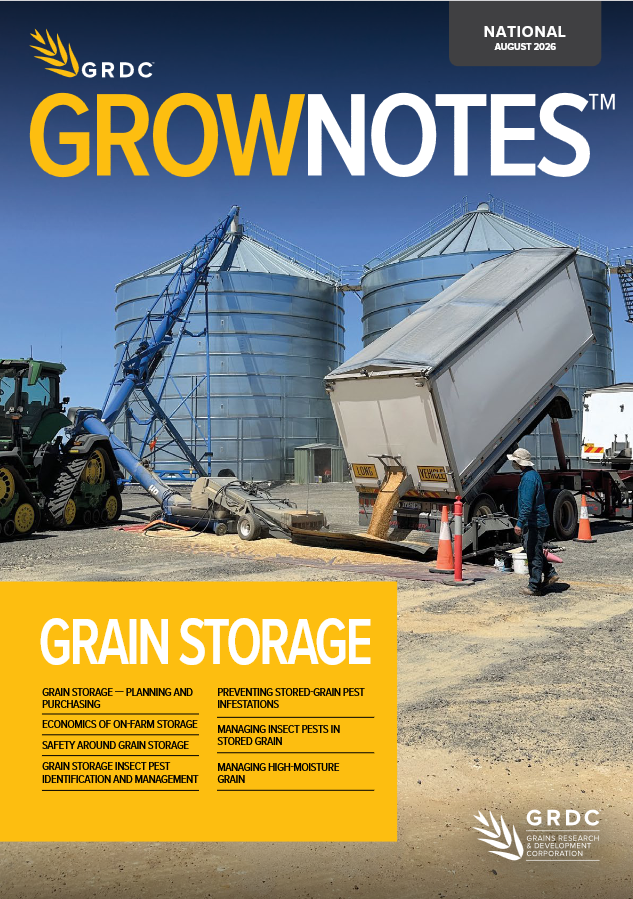
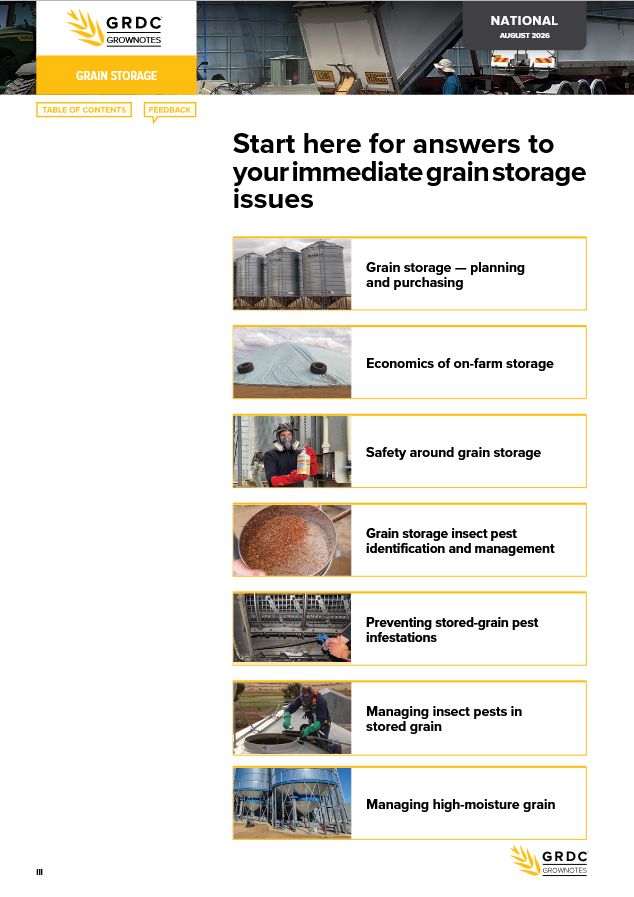
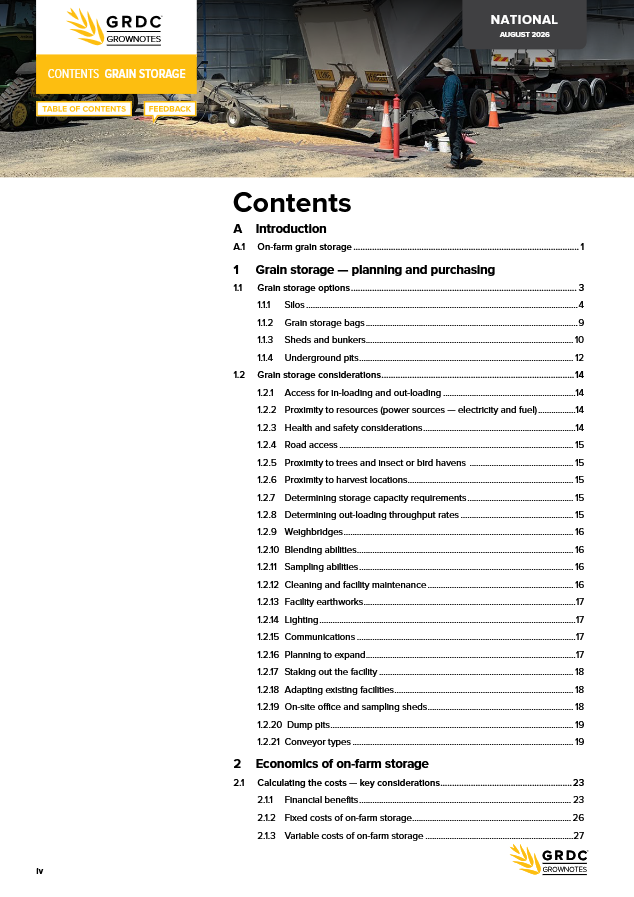


The GRDC Grain Storage Extension Team are often asked what tools and equipment aid grain storage management and where they can be sourced.
This catalogue is a reference of useful equipment with examples of where they can be sourced.
The GRDC Grain Storage Extension Team are often asked what tools and equipment aid grain storage management and where they can be sourced.
This catalogue is a reference of useful equipment with examples of where they can be sourced.

.Safe Work Australia announced changes to Worker Exposure Limits for airborne contaminants, affective December 2026. This article aims to provide the latest information available to manage phosphine use in compliance with the new limits.
Continue reading
When is the best time to fumigate stored grain? Ben White and Chris Warrick from GRDC’s Grain Storage team discuss three common fumigation timing strategies: pre-emptive fumigation after harvest, fumigation on insect detection, and calendar-based fumigation. Learn why gas-tight, pressure-tested silos are essential, how aeration cooling can improve storage outcomes, and how to balance fumigation timing with grain quality, market requirements, and buyer specifications.
Continue reading
Successful grain storage requires an essential grain fumigation process to achieve effective insect control and help prevent phosphine resistance in stored grain. Ben White and Chris Warrick from GRDC’s Grain Storage team explain best-practice phosphine fumigation, including the importance of gas-tight, pressure-tested silos, correct phosphine dosage calculations, exposure periods, residue management, ventilation requirements, and withholding periods. Whether you’re managing wheat storage, grain silos, or on-farm grain storage facilities, this practical guide provides valuable advice for successful grain fumigation, stored grain pest management, and maintaining grain quality.
Continue reading
This article outlines best practice for determining when to fumigate stored grain, highlighting the importance of cooling, monitoring, and gas-tight storage. It explains the risks of fumigating too early, relying on calendar-based treatments, and poor sealing, while reinforcing that effective fumigation depends on correct timing, temperature, and exposure periods.
Continue reading
Phosphine remains the most widely used fumigant in Australia’s grain industry due to its effectiveness, low cost, and residue-free status. However, increasing resistance among key insect pests highlights the need for strict adherence to best practice guidelines.
This comprehensive manual outlines:
1. Proper application methods across different storage types (silos, bunkers, sheds)
2. Critical factors such as gas concentration, exposure time, temperature, and moisture
3. Equipment for monitoring gas levels and ensuring safe fumigant handling
4. Strategies to delay and manage resistance, including use of sulfuryl fluoride and integrated pest management
Compiled by leading experts including Dr Manoj Nayak, Dr Joanne Holloway, Chris Warrick, and Patrick Wilson, this document is a valuable resource for growers, storage operators, and advisors working to maintain grain quality and market access.
Continue reading
During this video, Chris Warrick and Alex Conway discuss ‘Fumigation recirculation’ and provide guidance on both passive and powered systems.
Continue reading
Protecting your harvest from insect threats requires diligent control and precise fumigation practices. In GRDC’s article, Insect Control and Effective Fumigation Help Guard Your Harvest, the focus is on strategies to enhance biosecurity and preserve grain quality. Key points include:
Fumigation Best Practices: Effective fumigation techniques are critical for eliminating pests while safeguarding the crop.
Biosecurity Measures: A strong biosecurity approach helps prevent insect infestations before they become a threat.
Integrated Pest Management: Using a combination of methods, including proper storage and sanitation, can minimize pest risks.
Stay informed on the best methods to protect your harvest and ensure grain quality