As the use of on-farm grain storage across Australia expands, the question of economic viability gains significance.
There are many examples of growers investing in on-farm grain storage and paying for it in one or two years because they struck the market at the right time, but these examples are not enough to justify greater expansion of on-farm grain storage.
Analysis by Pinion Advisory found that post-harvest grain price movements are highly variable and difficult to predict. In most cases, the value of on-farm grain storage depends on the individual farming business, with the key drivers varying according to location, harvest logistics, grain quality and marketing opportunities.
Read the full analysis in the On farm grain storage benefits analysis report.
For most growers, the greatest return from on-farm storage comes from combining multiple benefits rather than relying on seasonal price movements alone. These may include improving harvest logistics, segregating or blending grain to capture quality premiums, increasing marketing flexibility, and delivering grain directly to buyers to reduce freight and handling costs.
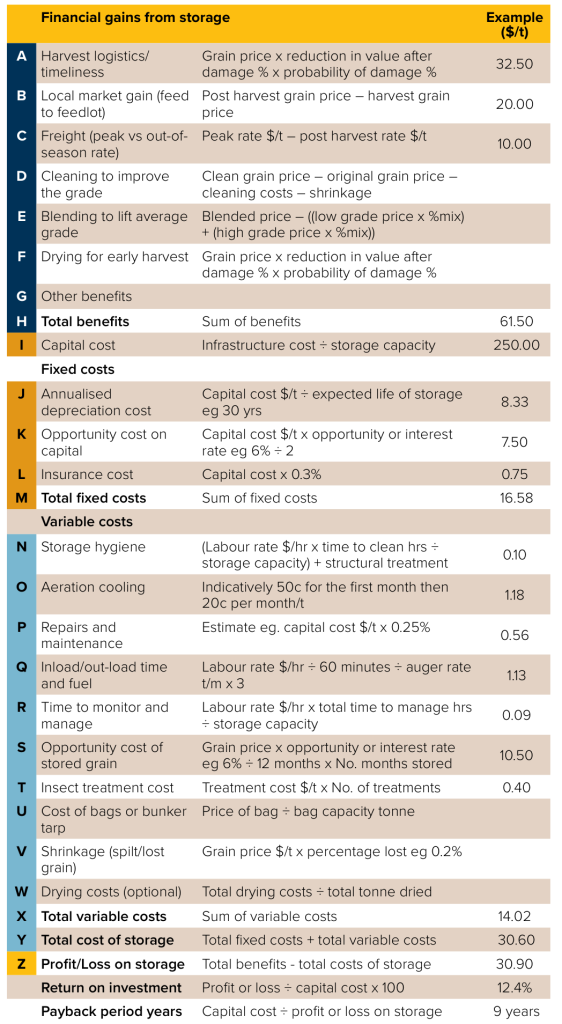
To make a sound financial decision, compare the expected returns from grain storage vs expected returns from other farm business investments, such as more land, more harvest equipment, wider machinery, more trucks or paying off debt. Calculating the costs and benefits of on-farm storage enables a return on investment (ROI) figure, which can be compared with other investment choices.
Use the grain storage cost–benefit analysis template (Table 3) to compare different storage types or varying storage scenarios.
The key to a useful cost–benefit analysis is identifying which financial benefits to plan for and costing an appropriate storage to suit that plan. If the plan includes the potential to store grain for longer periods, a gas-tight sealable storage option should be considered to enable fumigation.
When considering temporary storage types for shorter term storage, give thought to the business’ labour availability to fill, manage and empty those storages. Being realistic about your attentiveness to detail when it comes to setting up and managing temporary storages meticulously could avoid an inevitable disaster of damaged grain.
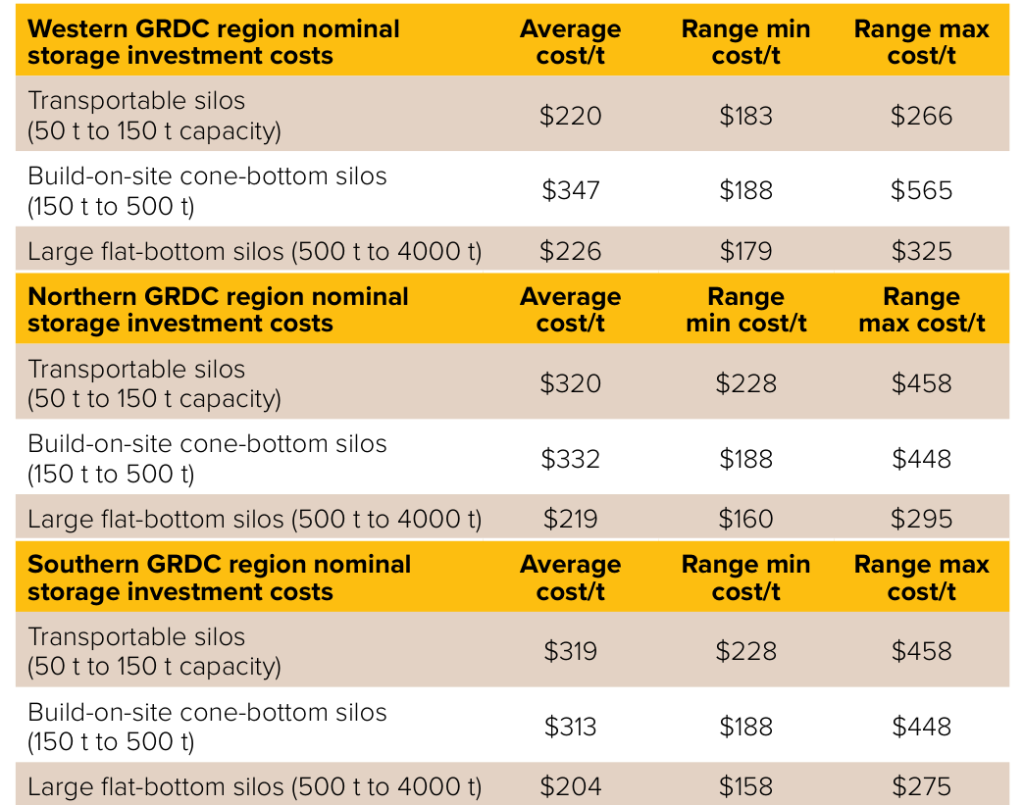
A combination of storage types often works well. Cost each component individually before combining the results to calculate the overall return on investment for the proposed system. To compare costs and benefits consistently, convert all figures to a dollars-per-tonne ($/t) basis.
When comparing manufacturer-quoted storage capacities, check that the grain bulk density used is consistent with the grain you intend to store. It is also important to reality-check the figures throughout the calculation process to ensure they are realistic.