Skip to content
Insect Control

Users must heed rising phosphine resistance

Key points
– Strong resistance to phosphine in stored grain insects has both increased and spread over the past decade, with more detections in eastern Australia than Western Australia
– Misuse of phosphine, particularly in unsealed storages, appears to be the main reason for the development of strong resistance

Read More »
Insect Control

Phosphine venting and delivery limits require more research

Key points
– Testing phosphine residue in trucks at receival sites is required for operator safety and label compliance
– Sampling and testing methods require further research and development to avoid penalising those doing the right thing
– Using a phosphine meter on farm is the surest way to avoid truckloads being rejected

Read More »
Grain Storage Facilities

Boosting on-farm storage with bags and bunkers

With care, bags and bunkers can provide a practical solution to the harvest logistics challenge.

High-quality sealed silos offer top-of-the-range storage, but the boom in demand for on-farm storage means growers are also exploring cheaper options to expand capacity.

Bags and bunkers have become a popular, more affordable choice, but growers need to be on their toes to avoid costly failures with these temporary storage solutions.

Read More »
Grain Storage Facilities

Top tips for grain storage success

Take a sneak peek at some of GRDC’s storage extension team’s favourite systems.

The grain storage extension team regularly meets growers and industry participants on-farm to run workshops and provide specialist advice. Examples of well-laid-out facilities, smart features, ideas and innovations are highlighted here to help inspire other growers who are investing in grain storage infrastructure.

Read More »
Grain Storage Facilities

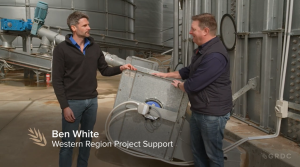
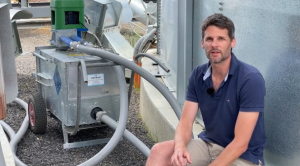
Getting the most out of ground-level fumigation

Key message
– Ground-level fumigation systems are safer for users, but phosphine can be explosive, so precautions are needed to ensure a safe and effective fumigation.
Phosphine fumigation can now be completed using ground-level application systems, which are much safer as the user does not need to climb to the top of the silo. But some key features and precautions are needed for successful and safe fumigation:

– recirculation;
– space for liberation;
– condensation trap; and
– pressure relief for power outage.

Read More »
Grain Storage Facilities

When to open sealed silos

Key points
– Gas-tight sealable silos should meet the Australian Standard AS2628-2010 for sealing but should only be sealed during a fumigation
– Open sealed silos after fumigation to protect seals and grain quality and, importantly, to prevent excess fumigant absorption

Read More »
Insect Control

Successful fumigation: GAS-TIGHT AND JUST RIGHT

Key points
– Successful pest control in storages depends on combining regular grain monitoring, good hygiene, aeration cooling and correct fumigation practices
– Fumigation results rely on a gas-tight sealable storage to achieve the required gas concentrations and exposure times (C x T) to kill all insect pest life stages
– In larger silos (150 to 2000 tonnes) recirculating gases using a small fan during the fumigation ensures rapid, uniform distribution of phosphine gas

Read More »
Grain Aeration

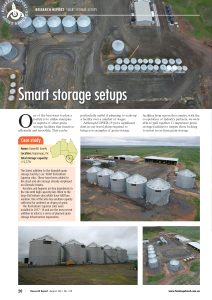
GroundCover Supplement – Grain Storage (Issue 156, Jan–Feb 2022)

Explore the latest grain storage research, fumigation practices, aeration systems, and on-farm storage innovations featured in the GroundCover Supplement: Grain Storage (Issue 156, Jan–Feb 2022). This edition highlights practical strategies helping Australian growers protect grain quality, manage phosphine resistance, improve storage efficiency, and maximise long-term profitability.

Read More »