Key points
– Successful pest control in storages depends on combining regular grain monitoring, good hygiene, aeration cooling and correct fumigation practices
– Fumigation results rely on a gas-tight sealable storage to achieve the required gas concentrations and exposure times (C x T) to kill all insect pest life stages
– In larger silos (150 to 2000 tonnes) recirculating gases using a small fan during the fumigation ensures rapid, uniform distribution of phosphine gas
Two GRDC GroundCover articles exploring the importance of sealed grain storage systems and research investigating grain storage performance, pest management, and effective storage practices.
Resistance monitoring of key insect pests has shown that combined grain protectants are a valuable integrated pest management tool for stored grain. Up to 30 per cent of freshly harvested grain is treated with contact insecticides – or grain protectants – before being placed into storage.
Resistant rusty grain beetles, one of the flat grain beetles, have been found throughout the grain supply chain, suggesting the need for adoption of area-wide integrated pest and resistance management.
Australian growers have relied heavily on phosphine fumigation to disinfest stored grain and meet market expectations for high-quality grain with nil tolerance to insects. However, reliance on one chemical over a long period of time has led to resistance.
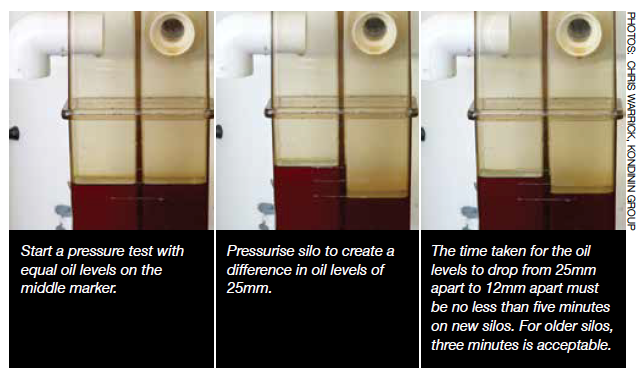
In order to kill grain pests at all stages of their life cycle (egg, larva, pupa, adult), phosphine gas needs to reach, and be maintained at, a concentration possible only in a gas-tight storage.
To control insects at all life stages the only option is to fumigate in a gas-tight storage.
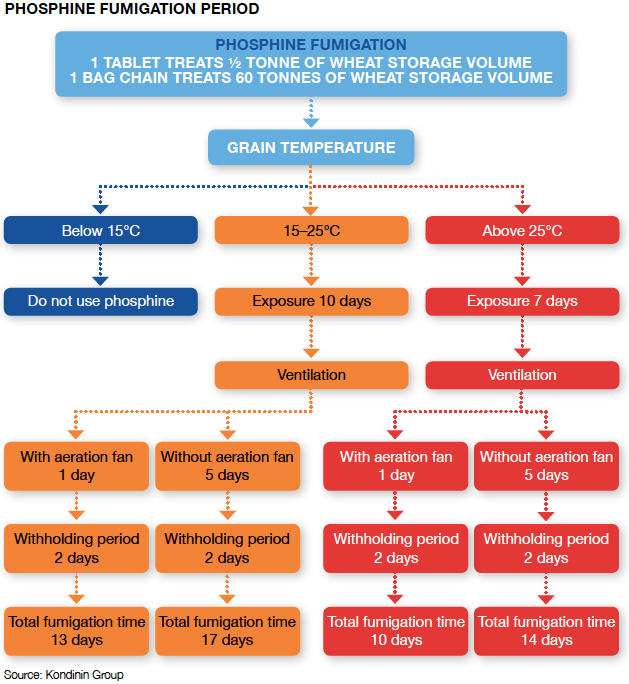
Cool grain temperatures require a longer fumigation period.
Aeration fans fitted on gas-tight silos provide a number of benefits including a shorter ventilation period following a fumigation.
The total time required for effective fumigation ranges from 10–17 days, accounting for the minimum exposure period, ventilation and withholding period. This highlights the importance of monitoring grain regularly and at least 17 days before out-loading to allow sufficient time to fumigate if required.
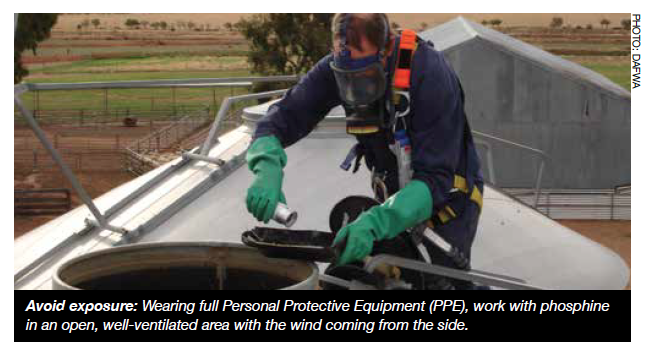
Avoid Exposure: Wearing full Personal Protective Equipment (PPE), work with phosphine in an open, well-ventilated area with the wind coming from the side.
Rates for success
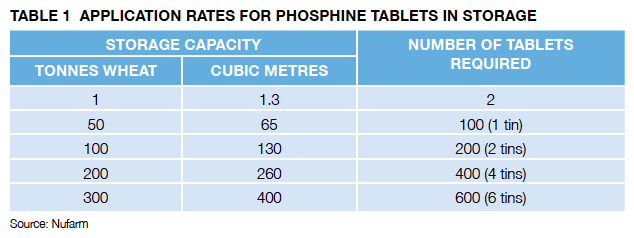
When determining how much phosphine to apply, it is important to treat the entire storage volume, regardless of how much grain is contained inside. For example, a 100 tonne silo full of grain requires 200 phosphine tablets. If that same 100t silo is only half full of grain, it still requires 200 phosphine tablets for effective fumigation.
Handle with care
Phosphine is a highly toxic gas with potentially fatal consequences if handled incorrectly. As a minimum requirement, the label directs the use of cotton overalls buttoned at the neck and wrist, eye protection, elbow-length PVC gloves and a breathing respirator with combined dust and gas cartridge.
Where to apply
Arrange the tablets where as much surface area as possible is exposed to air, so the gas can disperse freely throughout the grain stack. Spread phosphine tablets evenly across trays before hanging them in the head space or placing them level on the grain surface inside a gas-tight, sealed silo. Hang bag chains in the head space or roll out flat on the top of the grain so air can freely pass around them as the gas dissipates. Bottom-application facilities must have a passive or active air circulation system to carry the phosphine gas out of the confined space as it evolves. Without air movement, phosphine can reach explosive levels if left to evolve in a confined space.
Time to kill
To control pests at all life stages and prevent insect resistance, phosphine gas concentration needs to reach 300 parts per million (ppm) for seven days (when grain is above 25°C) or 200ppm for 10 days (between 15–25°C). Insect activity is slower in cooler grain temperatures so require longer exposer to the gas to receive a lethal dose.
Table 1 – Application rates for phosphine tablets in storage
Gas venting
Following fumigation, ventilate silos so grain can be delivered free from harmful gas residues. With tablet residue or bag chains removed, leave silos open for no less than five days, or no less than one day with aeration fans operating. The final step is to hold grain for a further two days after ventilation before using for human consumption or stockfeed
Disclaimer
Any recommendations, suggestions or opinions contained in this publication do not necessarily represent the policy or views of the Grains Research and Development Corporation. No person should act on the basis of the contents of this publication without first obtaining specific, independent professional advice. The Corporation and contributors to this Fact Sheet may identify products by proprietary or trade names to help readers identify particular types of products. We do not endorse or recommend the products of any manufacturer referred to. Other products may perform as well as or better than those specifically referred to. The GRDC will not be liable for any loss, damage, cost or expense incurred or arising by reason of any person using or relying on the information in this publication.
This GRDC GroundCover feature brings together two articles exploring the benefits of aeration cooling in grain storage, including solar-powered aeration systems and research showing how cooler grain temperatures can reduce insect pressure and help slow phosphine resistance development.
For more than 40 years Phosphine has been a safe and reliable means of controlling grain storage insects. Over 80% of stored grain is treated with this chemical but resistance to Phosphine is building amongst insect populations. So when a previously resistant strain of Rust Red Flour Beetle in Western Australia was eradicated by Phosphine it was a remarkable result.