Grain Storage Facilities
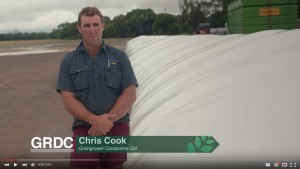
GCTV Extension Files: Grain Bags – a grower’s perspective
Hear the do’s and don’ts on grain bags from growers who have used them.

Hear the do’s and don’ts on grain bags from growers who have used them.

Get the best practice tips on storing grain in bags.

Philip Burrill explains the best way to store planting seed and why.
Its not always easy to tell the difference between types of damaging stored grain pests. Mark Stanaway from the Queensland University of Technology can show

Explore the GroundCover Supplement: Grain Storage (Issue 119, Nov–Dec 2015), featuring the latest research, grower case studies, and practical strategies for on-farm grain storage. Topics include phosphine resistance, aeration cooling, nitrogen storage technology, grain hygiene, and tools helping growers improve grain quality and profitability.
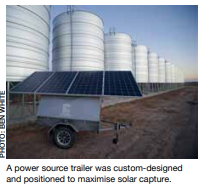
Independent engineers and grain storage specialists have demonstrated that the sun’s energy can be harnessed to keep silos that are located away from a mains power supply cool and insect-free. Tests in a 75-tonne silo at Wyalkatchem, Western Australia, 200 kilometres northeast of Perth, by independent engineers. Ben White and Josh Giumelli and grain storage specialists Chris Warrick and Peter Botta showed it is possible to build an energy-efficient, solarpowered. aeration-cooling system.
New insights into the ecology of three major
insect pests of stored grain have implications
for farm hygiene practices
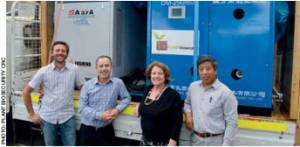
WA growers will put controlled-atmosphere technology through its paces this harvest,
as part of research into chemical-free alternatives for stored-grain insect control
It seems unlikely there will be a single solution to replace the highly effective phosphine. Rather, a suite of alternatives will be required, applied with tactical precision to extend the life of phosphine and maintain Australia’s export commitment of nil live insects in grain shipments
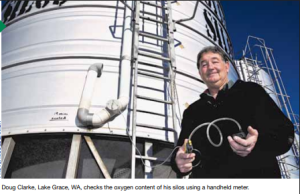
Replacing oxygen in grain storage silos with nitrogen has proven an effective way to remove insects at all stages of their life cycle, leaving stored grain – be it wheat or canola – preserved, residue-free and subject to no withholding periods.